
One year, three months, two weeks and five days after Gov. Jay Inslee made Washington among the first states in the country to impose broad economic and social COVID-19 restrictions, our state has returned, somewhat, to normal.
Some limited restrictions, however, remain in place, including for indoor events of 10,000 or more people and mask requirements in some public spaces. But while many of us are celebrating the state’s reopening Wednesday, public health officials are keeping a close eye on emerging coronavirus variants.
We’re updating this page with the latest news about the COVID-19 pandemic and its effects on the Seattle area, the U.S. and the world. Click here to see previous days’ live updates and all our other coronavirus coverage, and here to see how we track the daily spread across Washington and the world.

WHO decision challenges West to recognize Chinese vaccines
The World Health Organization said Thursday that any COVID-19 vaccines it has authorized for emergency use should be recognized by countries as they open up their borders to inoculated travelers.
The move could challenge Western countries to broaden their acceptance of two apparently less effective Chinese vaccines, which the U.N. health agency has licensed but most European and North American countries have not.
In addition to vaccines by Pfizer-BioNTech, Moderna Inc., AstraZeneca and Johnson & Johnson, the WHO has also given the green light to the two Chinese jabs, made by Sinovac and Sinopharm.
In its aim to restore travel across Europe, the European Union said in May that it would only recognize people as vaccinated if they had received shots licensed by the European Medicines Agency.
“Any measure that only allows people protected by a subset of WHO-approved vaccines to benefit from the reopening of travel … would effectively create a two-tier system, further widening the global vaccine divide and exacerbating the inequities we have already seen in the distribution of COVID-19 vaccines,” a WHO statement said Thursday.
Lower rents? Check. Speak-easy? Check. How office landlords are enticing tenants

Even as life returns to many New York City neighborhoods, its big commercial districts are awash with empty office space. Most workers haven’t yet returned — and it’s unclear if they all will. That uncertainty is terrifying the city’s biggest office landlords, and many of them are going to great lengths to retain and attract tenants.
Lower rents or free months in multiyear leases are now de rigueur. But landlords are also trying to entice new and returning tenants with sweeping redesigns, new technology, upscale new clubs and food halls.
Office landlords largely weathered the pandemic because tenants could not break their leases and had to keep paying rent. But as leases expire, some large companies are indicating that they will need significantly less space.
“This is a slow-moving train wreck,” said Daniel Alpert, managing partner of Westwood Capital, a small financial firm.
US jobless claims tick down to 411,000 as economy heals

The number of Americans applying for unemployment benefits dropped last week though new initial claims for unemployment benefits fell only slightly in Washington.
In the state, new initial claims for unemployment fell from 7,767 to 7,763 the week that ended June 26, according to data from the federal Department of Labor. The Washington state Employment Security Department reports its own figures later Thursday; those often differ from the federal numbers.
The Labor Department said Thursday that jobless claims in the U.S. fell just 7,000 from the previous week to 411,000. Weekly claims have fallen steadily this year from about 900,000 in January.
The economy expanded at a healthy pace in the first three months of the year, the government also reported Thursday, and economists are optimistic that growth will accelerate in the April-June quarter. As the pandemic fades, states and cities are lifting more business restrictions — Washington reopened June 30 — and the economy is picking up as consumers are traveling, eating out more, and visiting movie theaters and amusement parks.
City of Seattle aims to draw people back downtown, post-pandemic, with concerts, sidewalk sales and more

As COVID restrictions eased across the state Wednesday, Seattle Mayor Jenny Durkan and the Downtown Seattle Association announced a slate of events to take place July 12-26 as part of Welcome Back Weeks. They’re part of the city’s downtown recovery effort, which aims to bring workers, visitors and small businesses back to downtown Seattle after the pandemic left many downtown buildings empty.
“As a city, it’s time to turn our collective attention to recovery, and ensure we build our neighborhoods back better, more just and more equitable,” Durkan said in a news release. “As part of this effort, the City and our partners are ready to welcome you back downtown, and to welcome back our artists.”
Welcome Back Weeks will include concerts featuring local artists, sidewalk sales, food trucks, in-park happy hours, urban hikes and a “Halloween in July” celebration. Three large-scale events will take place in Chinatown-International District, Pioneer Square and Westlake Park, while promotions and smaller-scale events will be across downtown neighborhoods.
Colony of shy Albanian pelicans flourishes during pandemic

The pandemic has brought one good thing to western Albania’s Divjaka-Karavasta Lagoon — badly needed peace and quiet for endangered mating pelicans, and resulting population growth.
Regional environmental officials say nesting pairs have increased by one-fifth in the last two years as the numbers of human visitors have halved.
Situated 60 miles southwest of the capital, Tirana, the seaside Divjaka-Karavasta National Park is home to around 260 bird species, but it’s best known for the “curly pelicans,’ as the locals call the giant Dalmatian Pelicans with their 11-foot wingspan.
“Peace and quiet during the pandemic has helped us a lot in the preservation of Pelican Island,” said Adrian Koci, head of the Regional Agency of Protected Areas.
Illicit vaccine sites irk Panamanians fed up with inequality

One Monday in June in an upscale neighborhood of Panama City, people noticed something odd: Strange cars were coming and going from the Coco del Mar Suites, a nondescript three-story residential building surrounded by luxury oceanside high-rises.
It wasn’t long before the newspaper La Prensa cleared up the mystery. In a second-floor apartment that was recently spruced up with a new coat of paint and had air conditioning and electrical work done, someone was running a clandestine COVID-19 inoculation site purportedly offering the Pfizer-BioNTech vaccine.
Investigators soon linked it to yet another scheme of underground injections a week earlier, this one on the 43rd floor of a residential skyscraper in the even wealthier coastal neighborhood of Punta Pacifica.
Authorities have only confirmed 32 people received shots between the two operations, but it nevertheless sparked outrage in Panama, where the government is supposed to be the only supplier of coronavirus vaccines, free and prioritized by age and risk level. These recipients were perceived as trying to use their privilege to cut in line even as the country sees a new rise in infections.
Israel scrambles to curb jump in COVID infections

Israel, a world leader in coronavirus vaccinations, reported its highest daily infection rate in three months as it scrambles to contain the spread of the new delta variant.
Authorities are racing to vaccinate children and are considering tighter travel restrictions at the country’s main airport.
The Health Ministry on Thursday reported 307 new cases on Wednesday, the highest in nearly three months and a rise from 293 newly-diagnosed cases a day earlier. The health ministry reportedly expects those numbers to jump in coming days, raising concerns that Israel is plunging back toward a crisis.
In recent months, Israel has reopened businesses, schools and event venues, lifting nearly all restrictions after it inoculated some 85% of the adult population. It’s now seen as an early-warning system of sorts for other nations.
Washington mask rules still in place

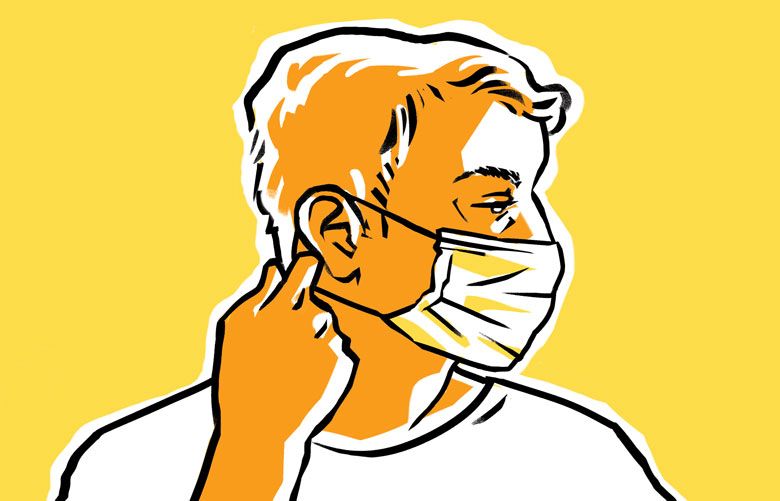
Though mask mandates were largely lifted as the state eases restrictions, face coverings are still required in some settings.
from WordPress https://ift.tt/3dA7gzh
via IFTTT

No comments:
Post a Comment