HomeWorld News UpdatesCoronavirus daily news updates, July 23: What to know today about COVID-19 in the Seattle area, Washington state and the world – The Seattle Times
Coronavirus daily news updates, July 23: What to know today about COVID-19 in the Seattle area, Washington state and the world – The Seattle Times
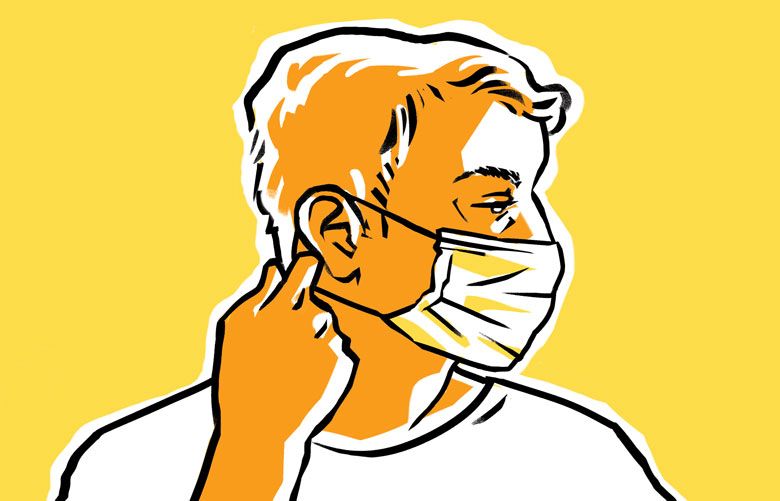
Meanwhile, many fully vaccinated people are beginning to worry about the delta variant and wondering if they should start masking back up. Here’s what experts recommend.
We’re updating this page with the latest news about the COVID-19 pandemic and its effects on the Seattle area, the U.S. and the world. Click here to see live updates from previous days, plus all our other coronavirus coverage, and here to see how we track the daily spread across Washington and the world.
AP-NORC poll: Most unvaccinated Americans don’t want shots
Most Americans who haven’t been vaccinated against COVID-19 say they are unlikely to get the shots and doubt they would work against the aggressive delta variant despite evidence they do, according to a new poll that underscores the challenges facing public health officials amid soaring infections in some states.
Among American adults who have not yet received a vaccine, 35% say they probably will not, and 45% say they definitely will not, according to a poll from The Associated Press-NORC Center for Public Affairs Research. Just 3% say they definitely will get the shots, though another 16% say they probably will.
What’s more, 64% of unvaccinated Americans have little to no confidence the shots are effective against variants — including the delta variant that officials say is responsible for 83% of new cases in the U.S. — despite evidence that they offer strong protection. In contrast, 86% of those who have already been vaccinated have at least some confidence that the vaccines will work.
That means “that there will be more preventable cases, more preventable hospitalizations and more preventable deaths,” said Dr. Amesh Adalja, an infectious disease specialist at Johns Hopkins University.
“We always knew some proportion of the population would be difficult to persuade no matter what the data showed, (and) a lot of people are beyond persuasion,” said Adalja. He echoed Centers for Disease Control and Prevention Director Rochelle Walensky in calling the current surge “a pandemic of the unvaccinated” because nearly all hospital admissions and deaths have been among those who weren’t immunized.
Talk radio host with COVID regrets vaccine hesitancy
A conservative talk radio host from Tennessee who had been a vaccine skeptic until he was hospitalized from COVID-19 now says his listeners should get vaccinated.
Phil Valentine’s brother, Mark Valentine, spoke at length on WWTN-FM in Nashville on Thursday about his brother’s condition, saying he is in a critical care unit on supplemental oxygen. Phil Valentine has had an afternoon talk radio show on the station for years.
“First of all, he’s regretful that he wasn’t a more vocal advocate of the vaccination,” Mark Valentine said of his brother. “For those listening, I know if he were able to tell you this, he would tell you, ‘Go get vaccinated. Quit worrying about the politics. Quit worrying about all the conspiracy theories.’”
After Phil Valentine tested positive for COVID-19 but prior to his hospitalization, he told his listeners to consider, “If I get this COVID thing, do I have a chance of dying from it?” If so, he advised them to get vaccinated. He said he made the decision not to get vaccinated because he thought he probably wouldn’t die.
Phil Valentine also said that he was “taking vitamin D like crazy” and had found a doctor who agreed to prescribe ivermectin, a drug used to treat parasites in animals. The U.S. Food and Drug Administration warns against taking ivermectin for COVID-19, advising that it is not an anti-viral drug and can be dangerous.
Bangkok closes public spaces as virus surges in Thailand
Thailand’s already locked down capital shut parks and the few remaining public places available to residents Friday, as the country registered a new high of coronavirus infections.
The near-total restriction on movements in the capital came as the prime minister demanded officials find ways to get the sick into hospitals after people with COVID-19 were found dead on the streets of Bangkok.
The Health Ministry reported 14,575 new cases and 114 deaths around the country, bringing deaths since the pandemic began last year to 3,811. Nearly all of the deaths happened since April following a number of spreading events and public holidays.
France starts supply bridge to help Tunisia cope with virus
France has established a “maritime bridge” to provide COVID-19 vaccines and medical oxygen to Tunisia, which is in the midst of one of Africa’s worst coronavirus outbreaks.
In the past five days, France has flown 1.1 million vaccine doses to the North African country and the French navy shipped three huge containers of badly needed oxygen on Thursday.
Of the vaccines, 800,000 doses came from French stocks, but Paris is also using the COVAX mechanism, the U.N.-backed program to provide shots to poorer countries, Lemoyne said.
The sea shipments are expected to continue until mid-August, bringing in equipment, masks and other needed material to help Tunisia which has reported more deaths per capita in the pandemic than any African country and among the highest daily death rates per capita in the world in recent weeks.
In venue fit for head of state, Japan PM seeks Pfizer doses
Japan’s prime minister met with Pfizer’s CEO in an unusually high-profile setting Friday to make sure the drugmaker would deliver the COVID-19 vaccine as promised by this fall as the nation faces supply concerns and a growing outbreak.
Pfizer Inc. CEO Albert Bourla, who is in Tokyo to attend Friday’s opening ceremony of the Olympics, was greeted by Prime Minister Yoshihide Suga at the Akasaka Palace state guest house, usually used to welcome heads of state.
During their nearly one-hour breakfast meeting, Suga and Burla discussed a stable shipment of the vaccine, and Suga stressed that vaccines are the “trump card” in restoring social and economic activities, officials said.
Japan has signed with Pfizer to receive 100 million COVID-19 vaccine doses by June, and additional 70 million between July and September.
Study: Chinese COVID shot may offer elderly poor protection
A new study suggests that a Sinopharm vaccine offers poor protection from COVID-19 among the elderly, raising questions for dozens of countries that have given the Chinese company’s shots to their most vulnerable populations.
A survey of blood samples taken from 450 people in Hungary at least two weeks after their second Sinopharm dose found that 90% under 50 years old developed protective antibodies. But the percentage declined with age, and 50% of those over 80 had none.
The study by two Hungarian researchers was posted online this week but not yet reviewed by other scientists. Three outside experts said they had no problems with the methodology of the study of the vaccine developed by Sinopharm’s Beijing Institute of Biological Products.
European agency is 1st to clear Moderna jab for children
The European Medicines Agency has recommended authorizing Moderna’s COVID-19 vaccine for children aged 12 to 17, the first time the shot has been authorized for people under 18.
In a decision on Friday, the EU drug regulator said research in more than 3,700 children aged 12 to 17 showed that the Moderna vaccine — already given the OK for adults across Europe — produced a comparable antibody response.
Until now, the vaccine made by Pfizer and its German partner BioNTech has been the only option for children as young as 12 in North America and Europe.
The U.S. Food and Drug Administration is currently considering whether to extend the use of the Moderna vaccine to the same age group.
With global vaccine supplies still tight, much of the world still is struggling to immunize adults, and agencies including the World Health Organization have urged rich countries to donate their doses to the developing world — where fewer than 2% of people have been vaccinated — rather than moving on to inoculate their less vulnerable populations.
Should vaccinated people mask up again as COVID-19’s delta variant spreads? There’s no one-size-fits-all answer, but these are the key factors to consider. One of them involves knowing what’s happening near you, which you can check on these graphics tracking infections by county.
There’s also a non-COVID reason you might want a mask: summer colds, which are hitting with a vengeance.




No comments:
Post a Comment